|
History of the 99th Bombardment Group
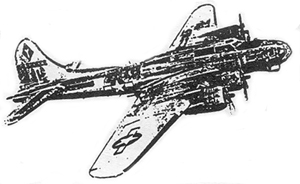
Organization and Training: On September 25, 1942, the 99th Bombardment Group (Heavy) was activated at Gowan Field near Boise, Idaho. Colonel Faye R. Upthegrove was designated as the Group Commander, and Lieutenant Colonel Leroy A. Rainey was designated as the Deputy Group Commander. The 99th consisted of the 346th, 347th, 348th, and 416th Bomb squadrons. Due to congestion at Gowan Field, the 99th immediately relocated to Walla Walla, Washington. During October the 99th received twelve flight leaders with crews, and four B-17 Flying Fortress bombers. During the first phase of training, the 99th received six more B-17s. The winter weather in Washington was not favorable for flying, so the 99th relocated to Sioux City, Iowa for the second phase of training. By the middle of November, the 99th had acquired about seventy five percent of its ground and support personnel. The third phase of training took place at Salina, Kansas in mid January of 1943. After completion of training, the 99th departed the United States at Morrison Field, Florida in February. The 99th B-17s flew the southern route via Boriniquen, Puerto Rico; Georgetown, British Guiana; Belem, Brazil; Bathhurst, Gambia; to their destination at Marrakech, Morocco. The ground and support personnel and equipment made the journey by ship.
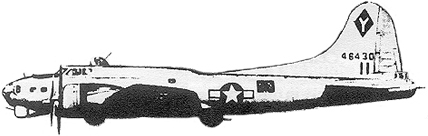
North Africa: The 99th was attached to the 5th Bombardment Wing of 12th Air Force, stationed in North Africa. Also in the 5th Wing were the 97th and 301st Bomb Groups. The 2nd Bomb Group would arrive from the United States in April of 1943, to be assigned to the 5th Wing. The 99th was stationed at Navarin, located near Constantine. The 99th flew its first combat mission on March 31, 1943. The 99th came to be referred to as the Diamondbacks, due to a diamond insignia painted on the vertical stabilizer of their B-17s. As Allied ground forces forced the German Afrikakorps to retreat into Tunisia, the 12th Air Force flew missions to cut off German supplies coming from Italy and Sicily. For the rest of 1943, the 99th flew missions primarily across the Mediterranean Sea to bomb targets in Sicily and Italy. In June, news of a possible Arab uprising had the men of the 99th nervous and wearing side arms at all times. Although a major uprising never occurred, there were acts of sabotage; includng a smal night time German paratrooper drop over Oudna Field, Tunisia taht resulted in the capture of three Germans. Summer dust storms made life miserable. On July 5th the group bombed an airfield at Gerbini, Sicily. An estimated one hundred enemy fighters made repetitive and fierce attacks, trying to turn the 99th back. The group however penetrated enemy defenses, and destroyed the airfield. For this mission, the 99th received its first Distinguished Unit Citation. On July 9th, the group flew missions in support of the Allied invasion of Sicily. The first Allied air attack on Rome took place on July 14th. Great care was taken by the 99th to avoid dropping any bombs on the Vatican City.
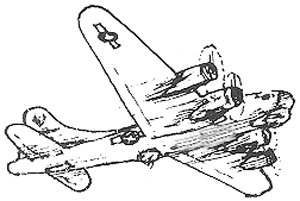
Move to Italy: On November 2, 1943, the four B-17 groups of the 5th Wing and two B-24 groups of the 9th Air Force were combined with two fighter groups to form the new 15th Air Force. On its first day of existence, the 15th flew a 1,600 mile round trip to bomb the Messerschmitt aircraft factory at Weiner Neustadt, Austria. Also in November, Colonel Upthegrove left the 99th, having completed his combat tour. With the Allied advancement up the boot of Italy, it was decided to relocate the 5th Wing there in order to bring more Axis targets within reach of the bombers. Each group was assigned a base on the Foggia plains, the 99th being stationed at Tortorella. The planes arrived at Tortorella in December of 1943. Living conditions at Tortorella were very harsh. The summers were hot and dusty, the winters cold and wet. Buildings were few, and airplane maintenance crews worked out in the open. The men lived in tents using homemade gasoline stoves for heat. The men constantly had to struggle through mud and water, snow and ice, or choking dust, depending on the season.
A New Commander: After Upthegrove's departure, the 99th went through temporary commanders until Colonel Ford J. Lauer assumed permanent command of the group on February 15, 1944. Lauer came to the 99th from 15th Air Force Headquarters. Throughout 1944, the 99th bombed targets in German occupied Italy, Germany, Austria, Greece, Bulgaria, France, Rumania, Hungary, Yugoslavia, and Czechoslovakia. Two more B-17 groups, the 463rd and 483rd, would be added to the 5th Wing in March of 1944. On April 23rd the group, led by Colonel Lauer, bombed an aircraft factory at Weiner Neustadt, Austria. The 99th was the lead group on this mission. The flak was intense, and aggressive fighter opposition was encountered but no planes were lost. Despite the heavy opposition, the 99th made a highly successful bomb run. Thirty-one of the groups airplanes returned to base, riddled with flak and bullet holes. For this mission, the 99th received its second Distinguished Unit Citation.
Operation Argument: Operation ARGUMENT was a planned series of coordinated precision attacks by 8th and 15th Air Forces, supported by RAF night attacks. These attacks were designed to target the German aircraft industry. ARGUMENT began on February 20, 1944, and came to be known as "Big Week" by the bomber crews. The German war machine got no rest during ARGUMENT, however the cost was high in Allied bombers lost.
Operation Frantic: During the last half of May, rumors were going around that "Something Big" was in the works. The rumors became fact at 2:00 AM on the morning of June 2nd. Colonel Lauer revealed that the 99th was going to bomb a railroad yard at Debrecen, Hungary, and fly on to land at Poltava, Russia in the Ukraine. At the briefing, Lauer told the men that "One hundred thirty-million Americans will look upon you today and you are their representatives in a land where you will be the first American combat men." The bombing that day was excellent, and no flak or enemy fighters were encountered. The 99th became the first task force of the USAAF to land on Russian soil. The first three days in Russia were non-operational. The men of the 99th spent their time sightseeing and making friends with the Russians. The Russian civilians cheered and saluted the "Americanyetts." On June 6th, the 99th flew a mission from Poltava, to bomb the German airfield at Galati, Rummania. After landing back at Poltava, the men of the 99th learned that the Allies had invaded Europe on the beaches of France. On June 11th, the 99th took off to bomb a German airfield at Focsani, Rummania. They continued on to land back at Tortorella. The first shuttle mission to Russia was deemed to be a success.
Operation Dragoon: The invasion of Southern France occurred on August 15th. The 99th flew missions on the 13th and 14th, destroying German gun emplacements and lines of communication near Toulon, France. The mission of the 15th, was in direct support of Allied invasion forces. The invasion of Southern France got little media attention because it had been overshadowed by the Normandy invasion on June 6th.
Colonel Lauer Departs: Colonel Lauer flew his last combat mission, leading the 99th on December 26th. The target was Blechhammer, Germany. The German flak and fighters were both fierce. The Germans gave Colonel Lauer a gift to remember by peppering his airplane. Lauer departed for the United States on January 1, 1945.
Colonel Schwanbeck: Colonel Ray V. Schwanbeck assumed command of the 99th, and led it through to the end of the European war. During April, twenty-three missions were flown, primarily in support of Allied ground forces. The 99th flew its 395th, and last, combat mission on April 26, 1945. Heavy clouds prevented the target from being sighted so no bombs were dropped. The group flew a total of 10,855 combat sorties.
What was accomplished: In eighteen months of operation, the 15th Air Force destroyed half of all petroleum production in Europe, a good part of German fighter production, and had crippled the enemy's transportation system. The 15th dropped a total of 303,842 tons of bombs on enemy targets in twelve countries. In all, 148,955 heavy bomber sorties were flown. The 15th, an outfit that the 8th Air Force referred to as "minor leaguers," had done a major league job. This in spite of the fact that the 15th had many fewer groups than the 8th. It is unfortunate that the 15th Air Force has received virtually no historical recognition. Almost all books, movies, etc., have focused on the 8th Air Force. Many people who study B-17s are surprised to learn that there even was a 15th Air Force operating from Italy as the 8th operated from England. The Axis countries had no doubts about the existence of the "Thunder From the South."
Written by Ford J. Lauer III
Airplane Sketches from the 99th BGHS |
